_1762508637542.webp)

The global market for botanical fungicide ingredients is undergoing a structural paradigm shift driven by stringent regulatory limits on Maximum Residue Levels (MRLs), rapid emergence of FRAC (Fungicide Resistance Action Committee) target-site resistance, and growing consumer preference for organic and zero-residue agriculture.
This comprehensive technical guide evaluates key phytoconstituents—including Resveratrol (Polygonum Cuspidatum Extract), Dihydromyricetin (Vine Tea Extract), Phloridzin (Apple Root Bark Extract), and Organosulfur compounds (Onion/Garlic Extracts)—manufactured by ZAC Biotech Co., Ltd.. It details their multi-site biochemical mechanisms (SAR induction, cell membrane disruption, chitin synthase inhibition), industrial formulation compatibility, and 2025–2030 commercial procurement trends.
1. The Global Shift Toward Botanical Fungicide Ingredients
Agricultural crop protection is experiencing an unprecedented transition. Conventional synthetic fungicides—such as quinone outside inhibitors (Strobilurins) and demethylation inhibitors (DMIs)—face accelerating efficacy degradation due to single-site genetic mutations in phytopathogenic fungi like Botrytis cinerea, Erysiphe necator, and Phytophthora infestans.
Concurrently, strict regulatory frameworks, such as the European Union’s Regulation (EC) No 1107/2009 and the US EPA’s Reduced-Risk Pesticide Program, continue to restrict or withdraw key synthetic active substances. Global B2B procurement managers and biopesticide formulators are actively seeking bio-based raw materials that offer:
- Multi-Site Modes of Action: Reducing the selection pressure for pathogen resistance development.
- Zero-Residue Profiles: Facilitating immediate pre-harvest intervals (PHI = 0 days) and export compliance.
- Synergistic Formulation Compatibility: Functioning effectively both as standalone biopesticides and as tank-mix resistance breakers alongside synthetic fungicides.
- Enhanced Plant Immunity: Activating Systemic Acquired Resistance (SAR) pathways while suppressing fungal spore germ tube elongation.
"Botanical fungicide ingredients do not merely kill pathogens; they rewire the host crop's metabolic defense network through phenylpropanoid and phytoalexin pathway priming."
— Technical R&D Director, ZAC Biotech Co., Ltd.
2. Core Standardized Botanical Actives & Technical Specifications
ZAC Biotech Co., Ltd. leverages over 28 years of botanical extraction expertise (est. 1996) to produce standardized, high-purity plant extracts designed specifically for agricultural crop protection formulators. Below are the primary botanical fungicide ingredients supplied globally.
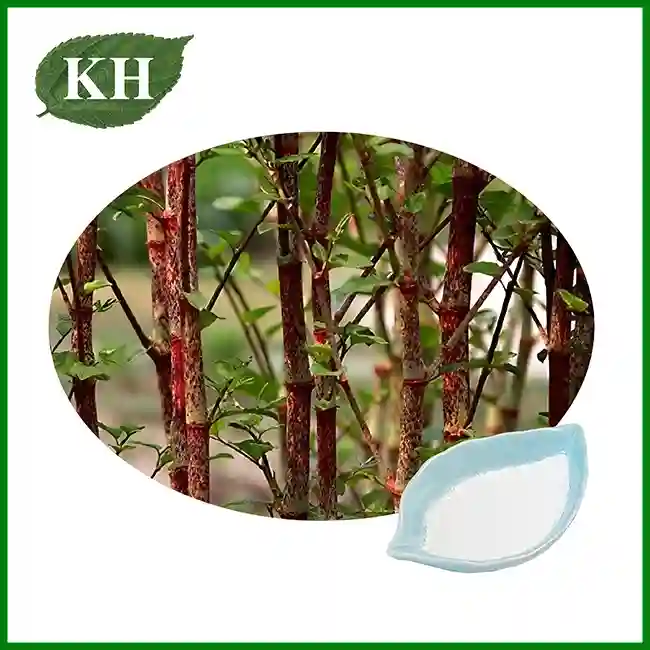
Polygonum Cuspidatum Extract
Induces Systemic Acquired Resistance (SAR) in crops, inhibiting powdery mildew, downy mildew, and gray mold spore germination.
View Specification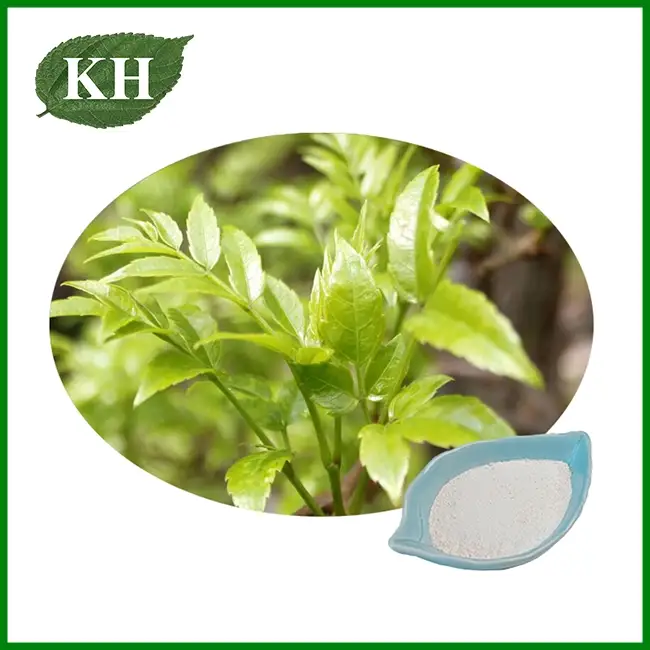
Vine Tea Extract
High-potency bioflavonoid disrupting fungal cell membrane permeability, causing reactive oxygen species (ROS) accumulation in fungal hyphae.
View Specification
Apple Root Bark Extract
Natural dihydrochalcone glycoside exhibiting potent inhibitory activity against apple scab (Venturia inaequalis) and soil-borne fungal pathogens.
View Specification_1779935700347.webp)
Onion Extract
Broad-spectrum bio-antifungal agent that disrupts chitin synthesis in fungal cell walls and suppresses bacterial leaf blight.
View SpecificationDetailed Technical Analysis of Key Botanical Actives
A. Polygonum Cuspidatum Extract (Trans-Resveratrol & Polydatin)
Derived from the rhizomes of Polygonum cuspidatum harvested from ZAC Biotech’s standardized cultivation bases, this extract is rich in stilbenoids. Trans-Resveratrol functions as a natural phytoalexin. When applied as a foliar spray or emulsifiable concentrate (EC), it triggers endogenous salicylic acid production in host crops, activating Pathogenesis-Related (PR) proteins (PR-1, PR-2, PR-5).
Target Pathogens: Botrytis cinerea (Gray Mold), Erysiphe necator (Powdery Mildew), Plasmopara viticola (Downy Mildew), and Fusarium oxysporum.
B. Vine Tea Extract (Dihydromyricetin / DHM)
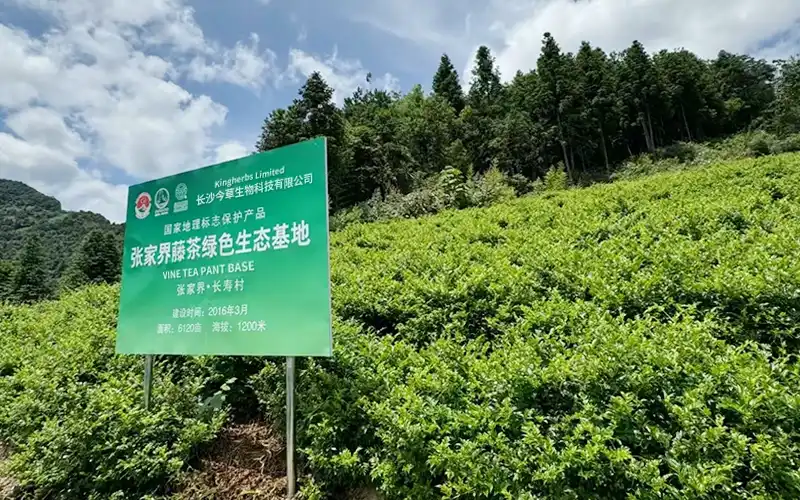
Sourced from Ampelopsis grossedentata grown at high elevations (1,200 meters) in Zhangjiajie, Hunan, ZAC Biotech's Vine Tea Extract contains up to 98% Dihydromyricetin (DHM). Research shows DHM inhibits fungal ergosterol biosynthesis and disrupts membrane integrity, leading to cellular electrolyte leakage in fungal hyphae.
Formulation Compatibility: Easily formulated into Wettable Powders (WP), Suspension Concentrates (SC), and Water Dispersible Granules (WDG).
C. Apple Root Bark Extract (Phloridzin & Phloretin)
Phloridzin is a unique dihydrochalcone glucoside found predominantly in Malus species. In plant pathology applications, Phloridzin hydrolyzes into Phloretin, which impairs fungal ATP synthesis and inhibits glucose transport across fungal mitochondrial membranes.
D. Onion & Garlic Extracts (Organosulfurs & Quercetin)
Rich in allicin precursors and quercetin bioflavonoids, these botanical extracts inhibit fungal spore germination and appressorium formation. Their volatile sulfur compounds provide synergistic contact-action efficacy when blended with botanical oils.
3. Scientific Matrix: Botanical Fungicide Ingredients Comparison
To assist formulation chemists and agrochemical procurement teams in selecting the optimal active raw material, the table below outlines the physical, chemical, and biological performance matrix of ZAC Biotech’s botanical ingredients.
| Botanical Ingredient | Key Active Compound | Standard Spec Range | Primary Targeted Pathogens | Biochemical Mode of Action | Ideal Formulation Type |
|---|---|---|---|---|---|
| Polygonum Cuspidatum Extract | Trans-Resveratrol / Polydatin | 10% - 98% HPLC | Botrytis cinerea, Powdery Mildew, Downy Mildew | SAR Induction, PR-protein activation, Stilbene accumulation | SC, EC, WP, Microcapsules |
| Vine Tea Extract | Dihydromyricetin (DHM) | 50% - 98% HPLC | Colletotrichum, Phytophthora, Rice Blast | Membrane permeability disruption, ROS oxidative stress | WP, WDG, SC |
| Apple Root Bark Extract | Phloridzin / Phloretin | 80% - 98% HPLC | Venturia inaequalis, Soil-borne Rhizoctonia | Mitochondrial ATP inhibition, glucose transporter block | Foliar Spray, Seed Treatment |
| Onion Extract | Quercetin & Organosulfurs | Ratio 10:1, 20:1 / Quercetin 5%-95% | Bacterial Leaf Blight, Anthracnose, Rusts | Chitin wall disruption, spore germ tube inhibition | EC, Liquid Concentrate, Bio-oils |
| Mulberry Leaf Extract | Polyhydroxy Alkaloids / Flavonoids | 1% DNJ, Flavonoids 5%-20% | Damping-off, Sclerotinia sclerotiorum | Glucosidase inhibition, plant cell wall thickening | Soluble Liquid (SL), WP |
4. Future Procurement & Technical Trends (2025–2030)
As the global market for bio-fungicides accelerates toward a projected CAGR of 14.2% through 2030, biopesticide procurement officers and R&D teams must adapt to four transformative technical trends:
Trend 1: Micro-Encapsulation and Nano-Emulsions for Photostability
A historic limitation of natural botanical molecules has been rapid photodegradation under UV light. Advanced formulators are adopting micro-encapsulation (using liposomes, ethylcellulose, or sodium alginate matrices) and nano-emulsifiable concentrates (Nano-EC). This extends the UV field half-life of Resveratrol and Dihydromyricetin from 24 hours to over 14 days, offering prolonged residual crop protection.
Trend 2: Synergistic Botanical-Synthetic Premixes
To extend the commercial lifespan of synthetic fungicides (such as Difenoconazole or Azoxystrobin), agrochemical manufacturers are creating co-formulated premixes with botanical extracts. Blending 0.5% Trans-Resveratrol with half-dose synthetic fungicides achieves equal or superior control efficacy while preventing resistance buildup and staying below strict MRL limits.
Trend 3: Supercritical CO2 & Green Ethanol Extraction
Environmental regulatory bodies increasingly scrutinize the industrial solvents used in chemical extraction. ZAC Biotech Co., Ltd. utilizes eco-friendly extraction techniques—relying exclusively on food-grade ethanol and purified water. This ensures zero hazardous solvent residues in our bulk botanical powders, satisfying EU organic agricultural regulations.
Trend 4: HPLC Fingerprint Standardization for Batch Consistency
AI-driven search platforms and commercial buyers now demand verifiable chemical fingerprinting. ZAC Biotech provides high-performance liquid chromatography (HPLC) and gas chromatography-mass spectrometry (GC-MS) batch verification for every shipment, ensuring exact active content without variance.
5. Enterprise Advantages of ZAC Biotech Co., Ltd.
Selecting a B2B supplier for botanical fungicide raw materials requires an enterprise partner with complete vertical integration, rigorous quality management, and large-scale manufacturing capacity.
- 28+ Years of Manufacturing Heritage: Established in 1996 in Changsha, Hunan, China, ZAC Biotech has grown into a leading global B2B supplier of botanical extracts, natural oils, and custom premix formulas.
- Proprietary High-Altitude Cultivation Bases: Our Vine Tea and botanical crops are cultivated on 1,200-meter pristine mountain peaks in Hunan, delivering exceptionally high flavonoid and stilbenoid yields compared to lowland agriculture.
- 200+ Ton Annual Capacity: Operating two state-of-the-art clean production lines built to ISO and GMP standards, ZAC Biotech supports both high-volume agrochemical contracts and tailored R&D batches.
- PhD-Led R&D & Quality Control: Our dedicated analytical laboratory utilizes HPLC, UV-Vis, and microbial testing equipment to ensure full compliance with USP, EP, BP, and CP international standards.
- Zero-Pollution Green Processing: We employ pure water and food-grade ethanol extraction, ensuring eco-friendly production with full seed-to-extract batch traceability.
Accelerate Your Bio-Fungicide Formulation Development
Work directly with ZAC Biotech Co., Ltd. to secure bulk pricing, custom extraction ratios, technical dossiers, and certified sample kits for your lab trials.
6. Frequently Asked Questions (FAQ) for Agrochemical Buyers
Common queries submitted by global procurement managers, R&D scientists, and organic agricultural formulators regarding botanical fungicide ingredients.