_1762508637542.webp)

1. Executive Technical Overview of Polygonum Cuspidatum Extract
Polygonum Cuspidatum Extract, derived from the dried roots and rhizomes of Polygonum cuspidatum Sieb. et Zucc. (commonly known as Giant Knotweed or Japanese Knotweed, and traditionally designated as Hu Zhang in East Asian pharmacopeias), represents the primary commercial source of naturally occurring Trans-Resveratrol (3,5,4'-trihydroxystilbene) worldwide. For international health product manufacturers, cosmetics brand owners, and dietary supplement formulators, sourcing high-purity Polygonum Cuspidatum Extract offers a cost-effective, chemically stable, and scalable alternative to grape skin or synthetic resveratrol sources.
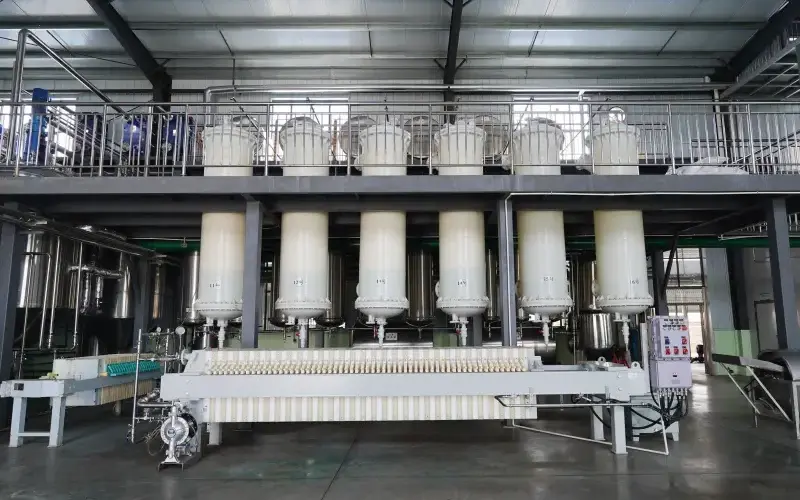
At ZAC Biotech Co., Ltd., our phytochemistry extraction infrastructure isolates and purifies active stilbenes and stilbenoid glycosides using proprietary multi-stage solvent extraction, column chromatography, and recrystallization processes. The primary bioactive constituents present in Polygonum cuspidatum rhizomes include:
- Trans-Resveratrol (CAS 501-36-0): The biologically active monomeric stilbenoid responsible for activating sirtuin enzymes (SIRT1), neutralizing reactive oxygen species (ROS), inhibiting NF-κB pathways, and promoting cardiovascular microcirculation.
- Polydatin / Piceid (CAS 65914-17-2): The 3-O-β-D-glucoside form of resveratrol, which exhibits higher water solubility and gastrointestinal absorption kinetics before enzymatic cleavage into free trans-resveratrol.
- Anthraquinone Derivatives (Emodin, Physcion, Rhein, Chrysophanol): Naturally co-occurring anthraquinones. While emodin possesses antimicrobial and laxative properties, high concentration levels in dietary supplements can induce gastrointestinal cramping. Consequently, global B2B procurement standards mandate strict control over residual emodin levels (<0.5% or <0.1% for pharmaceutical and cosmetic applications).
Information Gain Note: Trans vs. Cis-Resveratrol Isomerization
Trans-Resveratrol is the thermodynamically stable, biologically active isomer. Exposure to ultraviolet (UV) light or elevated heat causes irreversible photo-isomerization into Cis-Resveratrol, which exhibits significantly lower binding affinity for cellular targets. ZAC Biotech Co., Ltd. utilizes light-shielded, low-temperature vacuum crystallization techniques to guarantee that over 99.5% of total resveratrol content remains strictly in the bioactive Trans- orientation.
Technical Specification Comparison Table
Below is a standardized technical specification matrix for commercial grades produced under ISO 22000 and GMP standards by ZAC Biotech Co., Ltd.:
| Parameter | Standard Grade (50%) | High-Purity Grade (98%) | Water-Soluble / Micronized | Analytical Method |
|---|---|---|---|---|
| Trans-Resveratrol Assay | ≥ 50.0% | ≥ 98.0% | ≥ 10.0% – 20.0% | HPLC-DAD (306 nm) |
| Emodin Content | ≤ 2.0% | ≤ 0.5% (Option: <0.1%) | ≤ 0.1% | HPLC-UV (254 nm) |
| Appearance | Off-white to Tan Powder | Fine White to Off-White Powder | Light Yellow Dispersible Powder | Visual / Organoleptic |
| Particle Size | 95% through 80 mesh | 98% through 80 mesh | Micronized (<10 microns) | Laser Particle Analyzer |
| Loss on Drying | ≤ 3.0% | ≤ 1.0% | ≤ 5.0% | USP <731> (105°C, 2h) |
| Heavy Metals (as Pb) | ≤ 10 ppm | ≤ 5 ppm | ≤ 5 ppm | ICP-MS (USP <233>) |
| Arsenic (As) / Lead (Pb) | As ≤ 1 ppm, Pb ≤ 1 ppm | As ≤ 0.5 ppm, Pb ≤ 0.5 ppm | As ≤ 0.5 ppm, Pb ≤ 0.5 ppm | ICP-MS |
| Pesticide Residues | Complies with EP 10.0 | Complies with EP 10.0 / USP | Complies with EP 10.0 / USP | GC-MS/MS & LC-MS/MS |
| PAH4 (EU 2023/915) | ≤ 50 ppb total | ≤ 10 ppb (Benzo(a)pyrene <2 ppb) | ≤ 10 ppb total | GC-MS (EN 16619) |
| Microbiological Count | Total <1,000 CFU/g | Total <1,000 CFU/g | Total <1,000 CFU/g | USP <2021/2022> |