
Choosing Natural Plant Sweeteners is a business decision that reaches far beyond sweetness. The right ingredient can shape a product’s flavor, texture, label, and production cost. A poor fit may leave a bitter aftertaste or require costly recipe adjustments. Small details matter.
Start with the finished product in mind. A sweetener for a fruit drink may behave differently in baked goods or dairy alternatives. Compare sweetness intensity, flavor profile, solubility, heat stability, and how each option performs alongside other ingredients. Request samples and test them in your actual recipe. A spreadsheet can compare prices. It cannot taste the finished drink.
Reliable sourcing matters just as much. Ask suppliers for clear specifications, ingredient origin, allergen information, and documents supporting quality and batch consistency. Check whether the ingredient can meet your expected volume and delivery schedule. Also review labeling and food-safety requirements for the markets where you plan to sell; requirements can vary, so qualified regulatory advice may be needed. “Natural” alone does not explain how an ingredient was processed or how it will perform. That deserves a closer look.
There is no universal best choice. Compare options against your product goals, target customers, and real production conditions. A modest trial run can reveal issues that a sample cup misses. The selection process may feel less tidy than a buying chart suggests, but careful testing gives your business a more dependable basis for choosing.
What Natural Plant Sweeteners Are and How They Are Produced
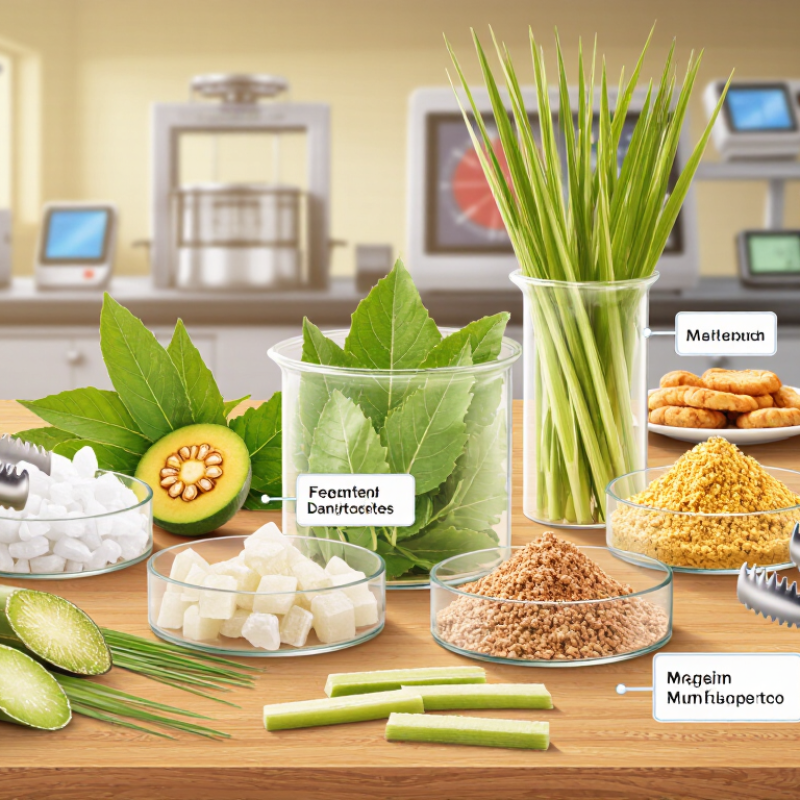
Natural plant sweeteners are sweet-tasting ingredients obtained from crops, leaves, fruits, or tree sap. Not all behave alike. Cane sugar and maple syrup contain sugars and provide bulk, browning, and moisture. Stevia and monk fruit extracts can taste very sweet in small amounts, but usually add little volume. Taste can linger. That matters in a finished recipe.
Production depends on the source. Cane juice is pressed, clarified, and evaporated; crystals may then be separated from syrup. Maple sap is filtered and heated until water evaporates and sugars concentrate. For leaf or fruit extracts, processors typically use water or other food-grade extraction methods, followed by filtering and concentration. Some products undergo further purification or drying. Processing changes color, taste, solubility, and cost, so “natural” alone tells a buyer very little. Ask suppliers for ingredient specifications, processing details, and batch testing records. A sample can reveal issues a data sheet misses.
Tips: Test sweeteners in your actual product, not just in water. Check sweetness strength, aftertaste, heat stability, and performance during storage. Compare cost per finished serving, too. Replacing sugar may affect texture and browning, not only sweetness. Results can be imperfect, so adjust the recipe in small steps and record each trial. There is no universal best option.
How to Choose Natural Plant Sweeteners for Your Business? - What Natural Plant Sweeteners Are and How They Are Produced
| Sweetener | Plant source | Typical production process | Approximate sweetness vs. sucrose | Approx. calories per 100 g | Business considerations |
|---|---|---|---|---|---|
| Steviol glycosides | Leaves of the stevia plant (Stevia rebaudiana) | Leaves are dried and steeped in water; sweet compounds are extracted, filtered, and purified. Some products use fermentation-derived steviol glycosides. | About 200–300 times sweeter | Generally negligible at typical use levels | Useful in low-sugar formulations. Taste profile and aftertaste vary by glycoside composition; it does not provide sugar’s bulk or browning. |
| Monk fruit extract | Fruit of monk fruit (Siraitia grosvenorii) | Fruit is crushed or steeped in water; mogrosides are extracted, filtered, and concentrated. Commercial products may be blended with other ingredients. | Often about 100–250 times sweeter; varies by extract | Generally negligible for pure extract | Check extract concentration and carrier ingredients. Pure extract is highly concentrated and usually needs a bulking ingredient in recipes. |
| Maple syrup | Sap of sugar maple and other maple species | Sap is collected and heated to evaporate water until it reaches syrup concentration; it is then filtered and packed. | Roughly similar to sucrose by weight; flavor affects perceived sweetness | About 260 | Provides characteristic maple flavor and liquid volume. Its water content can affect recipes, and color and flavor vary by grade and harvest. |
| Agave syrup | Core (piña) of agave plants | The plant core is processed to obtain carbohydrate-rich juice, which is filtered and heated or enzymatically treated to convert carbohydrates into soluble sugars, then concentrated. | Often perceived as sweeter than sucrose; varies with composition and product | About 300–320 | A liquid sweetener with a high proportion of fructose in many products. Consider its flavor, viscosity, sugar content, and impact on the finished product. |
| Date syrup | Whole dates | Dates are softened or cooked in water, pressed or blended, and the liquid is filtered and concentrated. Some products retain more fruit solids than others. | Generally similar to other syrups by weight; perceived sweetness varies | About 280–320 | Adds a dark fruit flavor and color. Confirm whether the product is filtered syrup or a whole-fruit paste, since composition and texture differ. |
| Cane sugar | Sugarcane stalks | Stalks are crushed to extract juice, which is clarified and evaporated. Crystallization and refining produce granulated sugar; less-refined products retain more molasses. | Reference point: 1× | About 387 | Provides bulk, browning, and familiar functional properties in baking. “Natural” or less-refined status does not make it calorie-free or sugar-free. |
| Erythritol | Typically made from plant-derived glucose, often from corn or wheat starch | Starch is converted to glucose, fermented by microorganisms into erythritol, then purified and crystallized. | About 60–70% as sweet | About 20 (approximately 0.2 kcal/g) | Adds bulk and is commonly used in blends. It can create a cooling sensation and may crystallize in some applications; check local labeling rules for polyols. |
| Values are approximate and may vary by crop, processing method, concentration, formulation, and testing source. Sweetness comparisons are indicative, not exact substitution ratios. Confirm nutrition, ingredient, allergen, and labeling details with suppliers and applicable regulations before commercial use. | |||||
FAQS
Test each option at the same use level and compare several concentrations with a sugar-based reference. Record onset, peak sweetness, and lingering taste. Taste it again.
Solubility, texture, browning, and stability can change the finished product. A sweetener that dissolves in tea may clump in a protein drink.
Keep sample temperature consistent and use coded samples to reduce bias. A small tasting panel may notice herbal, bitter, or cooling notes one person misses.
Track sweetness, aftertaste, color, mouthfeel, cost per serving, and process fit. Keep one control. A tidy scorecard still cannot predict every production result.
Test at least three levels in the same base recipe. Our first tasting can fool us; sweetness may seem stronger on day one.
Ask for current specifications, a certificate of analysis, batch information, and details about sourcing and traceability. Request information on allergen cross-contact and contaminant testing.
Recreate real conditions, including heat, acidity, and storage. For chilled drinks, check clarity after refrigeration; for baked goods, assess browning and texture after cooling.
Check ingredient naming, labeling rules, and restrictions on nutrition or health claims with qualified regulatory support. Keep the checks in writing; a supplier’s documents are not the whole review.
Conclusion
Choosing the right Natural Plant Sweeteners starts with understanding how they are made from plant sources and how production methods can affect their characteristics. Different options may suit different business needs, depending on the product, intended sweetness, and desired ingredient profile. Comparing sweetness intensity, taste, aftertaste, solubility, and performance in processing can help narrow the choices and predict how each sweetener may work in a finished product.
Businesses should also assess suppliers for consistent quality, clear specifications, reliable documentation, and compliance with the requirements relevant to their markets. Before making a larger commitment, test promising sweeteners in representative product formulations. Evaluate taste and texture, processing behavior, and overall product quality under practical conditions. A structured comparison helps teams select an option that fits both their product line and operational needs.